Yamaha’s reputation in Australia was built off-road first including decades of IT and YZ two-strokes on trails and tracks before the YZF and R-series road bikes became household names. Our floor at Derrimut usually has a wide spread of Yamahas at once: a YZ or YZF motocrosser, a WR enduro bike, an XT or TT trail machine, and an R1 or R6 for parts alongside them.
Yamaha’s four-stroke off-road engines share a lot of architecture between motocross and enduro versions of the same capacity. One of the more useful interchange facts for anyone chasing engine parts. We log this against model and year rather than assuming two similar Yamahas are the same underneath.
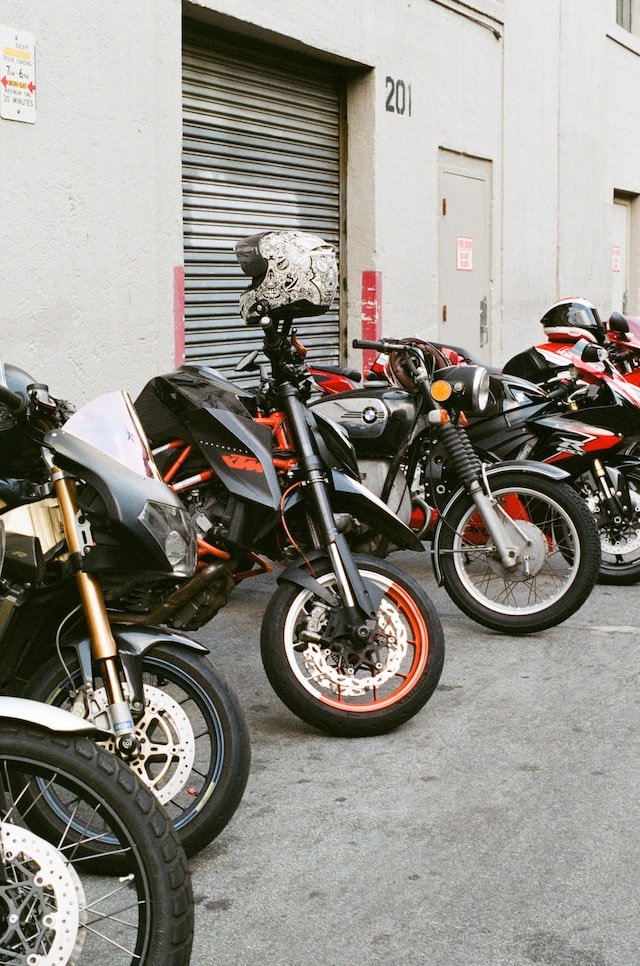
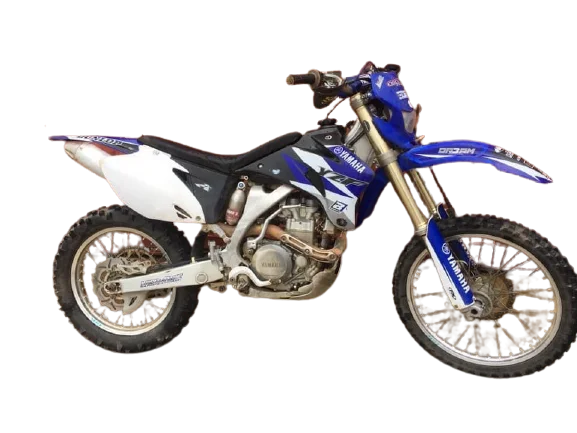
Motocross and enduro bikes including YZ, YZF, WR are stripped for plastics, suspension, engines, exhausts and swingarms, since that’s where the wear and crash damage concentrates on a bike ridden off-road. Road bikes, from R1 and R6 sportsbikes down to smaller-capacity models, come apart for fairings, wiring, wheels and engines.
Every part is catalogued against model, year and, where it matters, engine code before it’s listed in the Yamaha category, because a WR and a YZF of the same capacity can share an engine platform while needing completely different bodywork and electrics.
Yamaha’s four-stroke motocross and enduro models of the same capacity are often built around closely related engine platforms, tuned differently for track or trail. That means an engine or internal component pulled from a YZF can sometimes suit the equivalent WR, and vice versa. Something worth checking with us rather than dismissing outright or assuming from a catalogue.
Older IT-series and early YZ two-strokes are long out of production, and dealer stock for them dried up years ago. A wrecker is often the only realistic source left for engine internals, plastics or suspension components on these bikes, which is exactly why they’re worth checking with us before you give up on a rebuild or a restoration project.
A new fairing kit or subframe for an R-series sportsbike, or a full plastics kit for a YZ, can cost more than many owners are willing to spend on an older bike. A used part that’s already been checked is a fraction of that price, and it’s usually the difference between a bike getting fixed and a bike getting parked in a shed.
Yamaha’s off-road bikes get raced hard, which means a steady supply of used suspension linkages, brake components and drivetrain parts from bikes that were maintained properly even if they show real wear. That’s different to buying blind from an unknown source. We know what condition a part came off in and can tell you honestly.
Because Yamaha covers two-stroke and four-stroke motocross, enduro, trail and sportsbikes, we’re rarely short of at least one Yamaha on the floor at any given time, which keeps a broad spread of parts moving through the shop across every category the brand makes.
Yamaha’s spread across two-stroke and four-stroke, road and off-road, means the mix on our floor changes constantly. One week it might be motocross plastics and swingarms, the next a run of R6 fairing panels. Search the shop for current stock, or use the parts finder if what you need isn’t listed yet. New Yamahas come apart every week, and older two-stroke stock in particular tends to move fast once it’s listed, so it’s worth checking back regularly rather than waiting for a single big update to the catalogue. Riders keeping an early-2000s YZF or WR going often tell us the hardest parts to find new are exactly the ones we carry most consistently.
Before anything comes off a Yamaha at Derrimut, we record the frame number and, where it’s visible, the engine code, because that pairing is what stops a part being mismatched months later when it’s sitting in a box with no bike attached to it. Fluids are drained first, then the bike is stripped in a set order including bodywork and tank off a road machine, plastics and radiators off a motocrosser or enduro bike so nothing gets damaged pulling something else free.
Every part gets sorted into a condition tier before it goes near the shop. Engines are compression-tested and run where the bike allows it. Plastics are checked under good light for stress cracks around mounting tabs, not just surface fading. Wiring sub-looms are tested for continuity rather than passed on the strength of an unbroken plug. Nothing gets listed on the basis that it looks fine from a distance.
If you can’t see the exact part logged against your Yamaha’s frame number, the parts finder is the fastest way to ask before we’ve finished cataloguing the next bike through the gate.
Everything we sell has come off a real donor bike stripped at our own site. If you can’t find what you need in the shop, get in touch through contact us and we’ll check it against what’s coming apart next.
Confirm model, year and engine code rather than relying on capacity alone. A 250 four-stroke motocrosser and a 250 four-stroke enduro bike can share plenty underneath, but bodywork, mapping-related electrics and some engine covers can still differ, so check details rather than assuming they match because the badge and the capacity look the same.
For plastics, ask about UV fading and stress cracks around mounting tabs. Off-road plastics take a beating from sun and impact both, and Australian conditions are harder on plastic than most climates. For an engine, ask what it was checked for when pulled: compression, obvious internal damage, whether it ran under its own power at any point before it came off the donor bike. Two-stroke engines especially are worth asking about top-end and piston condition, since that’s the part that wears fastest and is most expensive to replace new from a dealer.
If you’re not certain whether a YZF part will suit your WR, or vice versa, ask us directly rather than guessing from a parts diagram or a forum post. We can tell you honestly where the platforms genuinely overlap and where they don’t, which saves you ordering something that almost fits but ultimately doesn’t do the job properly. It’s a five-minute question that beats paying for a return shipment and starting the search over again.
Have your Yamaha’s model, year and, if you know it, engine code ready before you order. Know whether you’re chasing plastics, an engine component or something electrical, since the checks differ for each. Photos of the damaged part help us confirm a match quickly, especially for anything off-road that’s had a hard life.
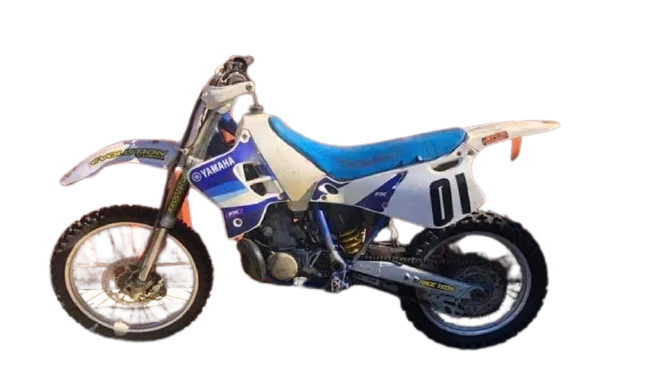
Because Yamaha’s range spans two-strokes through to modern sportsbikes, what’s available shifts week to week. Checking the Yamaha category regularly is the simplest way to catch new stock as it’s listed, rather than relying on a single enquiry.
Every Yamaha part ships from 145–147 Australis Drive, Derrimut VIC 3026, by road freight. Small components and plastics go out as parcels; engines, wheels and swingarms are palletised for the trip. Older two-stroke parts, given how sought after they can be, are packed the same way as anything else. Checked, wrapped and dispatched promptly rather than left sitting on a shelf.
Local buyers can collect in person during opening hours, Monday to Sunday, 9am to 5pm. Everyone else gets the same part in the same condition, wherever in the country they happen to be. Call 0408 795 705 or use contact us to confirm freight before ordering.
Often, since Yamaha’s motocross and enduro four-strokes of the same capacity share a lot of engine architecture. Some internals overlap directly; other components differ for mapping or gearing reasons. Tell us your exact model and year and we’ll confirm before you order.
When they come through the warehouse, yes. These older two-strokes are long out of production and dealer stock is essentially gone, so we treat this stock as high-demand and it moves quickly. Ask us directly if you’re chasing something specific.
No. Every part we sell is a used component recovered from a dismantled Yamaha. We are not an authorised Yamaha dealer and don’t sell new genuine parts. Everything is inspected before it’s listed for sale.
It depends on the part’s size and your location. A small parcel costs less than a palletised engine or wheel. Send us your postcode and the part you’re after through contact us and we’ll quote it before you commit.
Parts are checked and tested before sale where possible. Engines for compression, plastics for cracks, looms for continuity. Ask about specific warranty terms for the part you’re buying, and see our FAQ page for general terms.
Yes. We buy non-running, written-off and unwanted Yamahas across road, motocross, enduro and trail categories. Send details and photos through sell your bike and we’ll price it based on model, condition and what’s sellable off it.
We buy Yamaha bikes for wrecking in any condition. Crashed motocrossers, tired enduro bikes, non-running road bikes, and anything not worth the cost of repair. Given how much interchange exists across Yamaha’s off-road range, a well-used YZ, YZF or WR is a genuinely useful donor bike for us.
Send details and photos through sell your bike or call 0408 795 705. We’ll price it on model, year, condition and what’s realistically sellable off it, then organise pickup. See cash for bikes for more on how pricing works.
Popular Yamaha motorcycle models we wreck include YZF-R1 and R-series road bikes, Ténéré adventure, WR450F enduro, XSR retros and commuter scooters. Used Yamaha motorcycle parts cover OEM engines, fairings, brakes, forks and suspension.
Genuine used Yamaha parts ship Australia-wide. Tell us the model, year and suburb. Bodywork and spare parts are photographed. Call 0408 795 705 for Yamaha parts online that are not listed yet.
Motorcycle Wreckers Melbourne in Derrimut, VIC, supplies used dirt and road motorcycle parts from donor bikes. Open 7 days, 9am–5pm. Call 0408 795 705.
Copyright © 2026 Motorcycle Wreckers Melbourne. All Rights Reserved.
Copyright © 2026 Motorcycle Wreckers Melbourne. All Rights Reserved.