
We have Aprilia Motorcycle Wreckers specialized salvage yards that focus on dismantling damaged or decommissioned Aprilia bikes to salvage usable parts and components. Catering to enthusiasts and repair shops alike, they provide an essential resource for affordable replacement parts, contributing to the sustainability and maintenance of Aprilia’s diverse range of motorcycles, including sportbikes, adventure, and roadster models.

Our Ducati Motorcycle Wreckers are dedicated salvage grounds concentrating on the disassembly of impaired or retired Ducati motorcycles to reclaim functional parts and components. Serving both aficionados and mechanics, they offer a vital source for cost-effective spare parts, aiding in the upkeep and longevity of Ducati’s extensive lineup of motorcycles, which spans from high-performance superbikes to adventurous touring and classic naked models.
We have Gas Gas Motorcycle Wreckers, expert salvage operations dedicated to stripping down and repurposing parts from impaired or retired Gas Gas motorcycles. These specialized yards serve a dual purpose: they supply bike aficionados and mechanical repair businesses with cost-effective spare parts while promoting the longevity and upkeep of Gas Gas’s eclectic lineup of motorcycles, which encompasses trials, enduro, and motocross models.

We have Honda Motorcycle Wreckers dedicated dismantling facilities that concentrate on breaking down damaged or retired Honda motorcycles to reclaim functional parts and components. Serving both hobbyists and professional mechanics, these wreckers offer a vital source for cost-effective spare parts, aiding in the longevity and upkeep of Honda’s extensive array of motorbikes, encompassing cruisers, touring, and street bikes.

We have Husqvarna Motorcycle Wreckers specialized salvage yards dedicated to disassembling wrecked or out-of-service Husqvarna bikes to reclaim functional parts and components. Serving both hobbyists and professional mechanics, these wreckers offer a vital source for cost-effective spare parts, playing a significant role in the preservation and upkeep of Husqvarna’s varied lineup of motorcycles, encompassing motocross, enduro, and supermoto models.

Our Kawasaki Motorcycle Wreckers are dedicated salvage yards that concentrate on breaking down damaged or retired Kawasaki bikes in order to reclaim functional parts and components. Serving both hobbyists and professional mechanics, these wreckers offer a vital service for those seeking cost-effective spare parts, aiding in the ecological preservation and upkeep of Kawasaki’s extensive selection of motorcycles, such as cruisers, touring, and off-road variants.

Our Kawasaki Motorcycle Wreckers are dedicated salvage yards for breaking down damaged or retired Kawasaki bikes to reclaim functional parts and components. Serving both hobbyists and professional mechanics, these wreckers offer a vital service for those seeking cost-effective spare parts, aiding in the ecological preservation and upkeep of Kawasaki’s extensive selection of motorcycles, such as cruisers, touring, and off-road variants.

Our network includes Yamaha Motorcycle Wreckers, and expert salvage yards that dedicate their services to disassembling and reclaiming parts from damaged or retired Yamaha motorcycles. These specialized centers are for hobbyists and professional mechanics. They are pivotal for the upkeep of Yamaha’s extensive lineup of motorcycles, from their high-performance supersport bikes to their adventurous touring models and dynamic cruisers.

We have Suzuki Motorcycle Wreckers specialized salvage yards that concentrate on breaking down damaged or decommissioned Suzuki bikes to recover valuable parts and components. Serving both hobbyists and repair businesses, they offer a crucial service for obtaining cost-effective replacement parts, aiding in the sustainable upkeep and repair of Suzuki’s extensive array of motorcycles, encompassing sports, touring, and cruiser models.
Motorcycle Wreckers Melbourne operates from one site, in Derrimut on Melbourne’s western fringe. There’s no yard or counter in Launceston. Every order from a northern Tasmanian rider is picked from that single warehouse and freighted across Bass Strait to reach you, typically landing via Devonport.
What that one site gives you is depth of stock: around 90 dismantled bikes covering road, dirt and dual-sport machines, with parts added and sold constantly. Riders around Kings Meadows, Newnham and Prospect search the online shop the same way anyone else does including by make, model and part and order direct. If a part isn’t listed, the parts finder service checks the wider stock for you. Stock is dismantled from a mix of road, dirt and dual-sport bikes, so the same warehouse that supplies Melbourne commuters also supplies farm and trail riders working properties through the northern midlands.
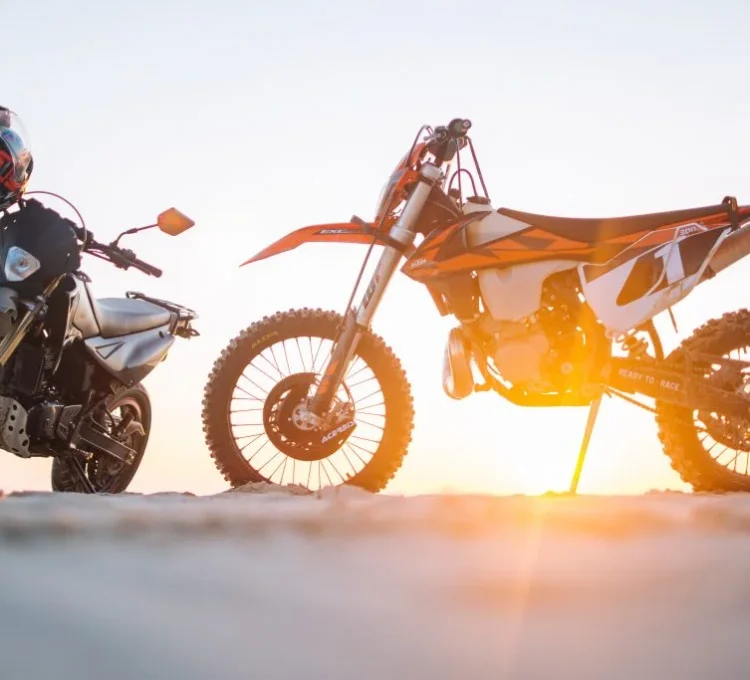
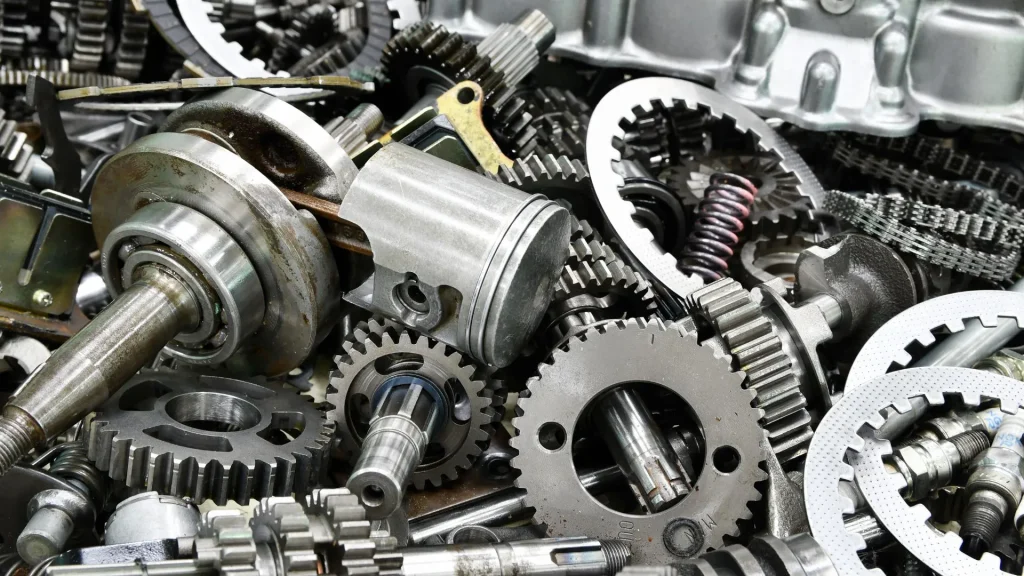
The online store lists genuine used parts pulled from roughly 90 bikes at any time, across Honda, Yamaha, Suzuki, Kawasaki, KTM, Husqvarna, BMW, Ducati, Aprilia and Gas Gas. Stock changes weekly as bikes are dismantled and new donors arrive, so it’s worth checking back if something isn’t listed today.
A good share of that stock is farm, trail and dual-sport machinery, which suits the riding done through the northern midlands and Tamar Valley as much as road bikes suit commuters in Launceston itself. Browse by make and model in the shop, or send a request through the parts finder service. Listings note which bikes have recently been dismantled, which is a quicker way to check current stock than scrolling every category.
Parts are checked before they’re listed, not just before they’re boxed. Engines get a compression and oil check, electrical parts are bench-tested, and brake, suspension and bodywork components are inspected for cracks, wear and UV damage.
Anything that doesn’t meet a usable standard is scrapped rather than listed. Because the check happens up front, what eventually ships to Launceston has already cleared that bar. You’re not paying Bass Strait freight on a part that turns out to be faulty. Suspension and wheel components get extra attention, since a bike ridden on unsealed farm tracks or trails puts more strain on bearings and bushes than one doing sealed commuter kilometres.
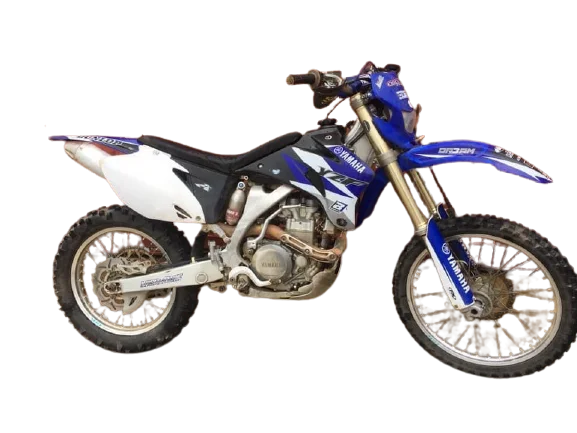
Every dismantled bike goes through the same process before its parts reach the shop. Fluids are drained and the bike is stripped down component by component, rather than parted out piecemeal, so each piece can be checked properly instead of pulled under time pressure.
Engines and gearboxes are compression tested and checked for obvious wear before listing. Wiring looms, switchblocks, regulators and other electrical parts are bench tested rather than sold on the assumption they work. Wheels are checked for trueness and bearing play, and brake components are inspected for wear, corrosion and pitting.
Bodywork including fairings, tanks, guards, seats is checked for cracks, stress fractures and sun damage before it’s photographed and listed. Parts are cleaned so you can actually see what you’re buying, not just told it’s in good condition in a listing description.
For a Launceston order, that inspection matters more than it might for a Melbourne one. You can’t easily drive back to Derrimut to swap a part that arrives faulty. Getting it right before dispatch, not after a complaint, is the point.
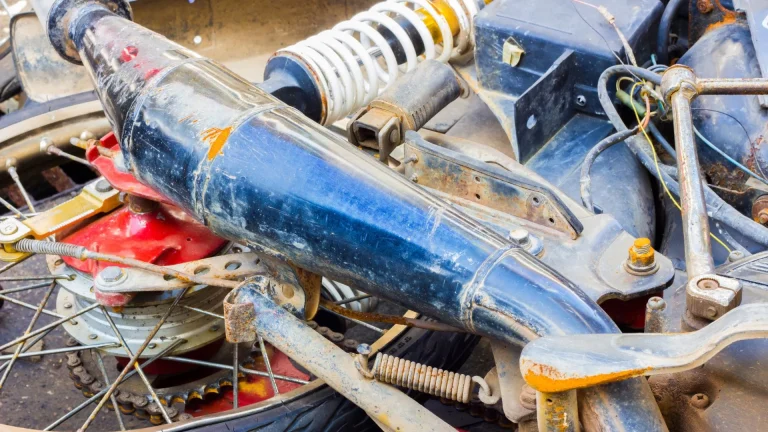
Bikes come in as insurance write-offs, trade-ins and private sales from across the country, not from any single region. Some arrive already recorded as written off; in Tasmania, that register is administered by the Department of State Growth, which handles written-off vehicle records for bikes registered in the state.
Once a bike is on site in Derrimut, it’s assessed and either repaired for resale or dismantled for parts.
Dismantling happens in-house at Derrimut. Each bike is assessed, fluids are drained, and it’s stripped in a set order. Bodywork off first, then electrical and cabling, then the mechanical components that need the most careful handling: engine, gearbox, forks and swingarm.
Every part is logged, cleaned and photographed before it’s listed, so what you see in the shop is the actual part, not a stock photo. Fasteners, brackets and small hardware are kept with the parts they belong to where practical, since a caliper or subframe missing its mounting bolts is only half useful.
The frame and any parts that don’t clear inspection are scrapped or sold for raw metal. Nothing marginal gets listed as a usable part. That decision gets made once, at dismantling, rather than left for a Launceston buyer to discover after paying freight.
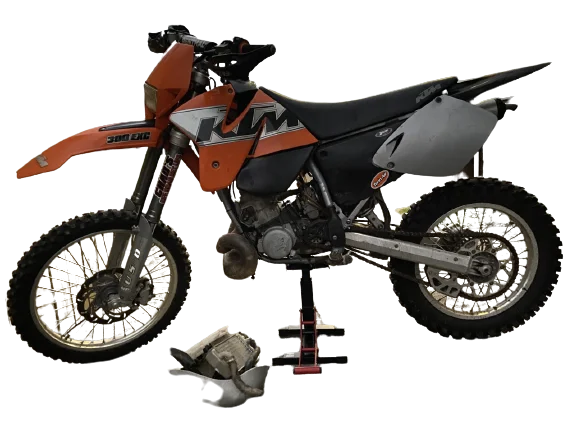
Orders are picked and packed at the Derrimut warehouse. Heavier or awkward items including tanks, wheels, swingarms are boxed or crated to handle a multi-day road and sea journey, not just a local courier run, since anything headed to Launceston is on a truck and a ship before it’s on a truck again.
Electrical parts and smaller components are packed separately from anything that could leak oil or fuel residue, and fragile bodywork gets extra padding, since the last thing anyone wants is a fairing that arrives cracked after clearing Bass Strait fine. Once packed, freight is booked through a road transport carrier and a consignment number is issued, so you can track progress rather than just wait.
Stock spans road, dirt and dual-sport bikes across ten brands: Honda, Yamaha, Suzuki, Kawasaki, KTM, Husqvarna, BMW, Ducati, Aprilia and Gas Gas. At any time there are roughly 90 dismantled bikes feeding the shop, so the mix shifts. A run of trail bikes one month, more road-focused stock the next.
For riders in and around Launceston, that spread covers most of what’s actually on the road locally: commuter and road bikes for trips into the CBD, and farm, trail and dual-sport machines for the northern midlands and Tamar Valley. Parts categories include:
Availability depends on what’s currently dismantled, so the shop listing is the accurate source at any given moment, not a fixed catalogue. If a specific part for a specific model isn’t there yet, the parts finder service can flag it for when a matching donor bike comes in.
Finding the right part starts with the bike’s make, model and year. Launceston riders searching for parts for a farm or trail bike should also have the engine capacity handy, since smaller-capacity models often share a shop listing.
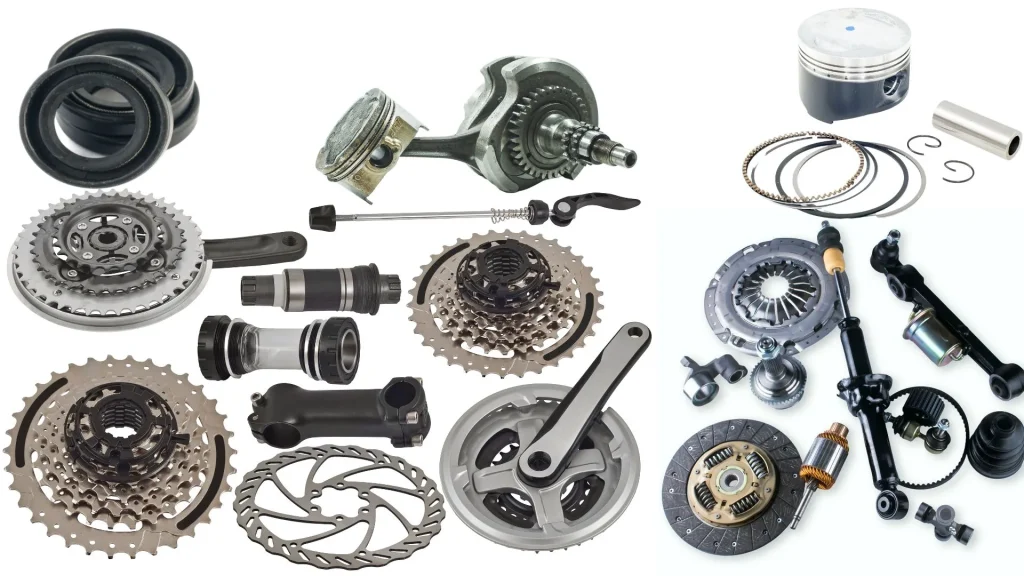
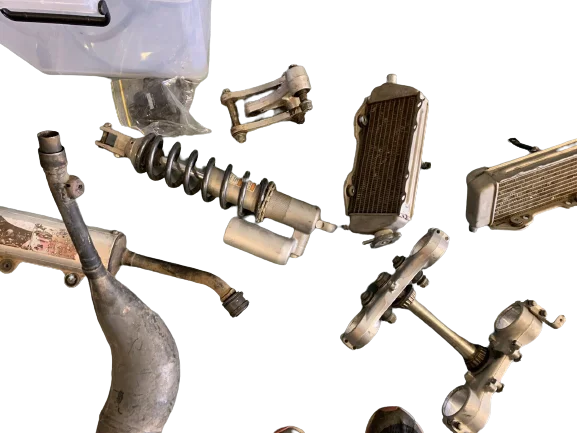
Fitment isn’t always as simple as matching model names including Tasmania has its share of grey-import and superseded models where a part interchange isn’t obvious from the outside. Listings note the model years a part suits, but for anything ridden hard through the northern midlands where farm and trail bikes cop more knocks than road bikes. It’s worth confirming against your bike’s VIN before ordering.
The parts finder service exists for exactly that: send the VIN or model details and get confirmation a part will actually fit before it’s freighted across Bass Strait. It’s a lot cheaper to ask first than to pay return freight on a part that doesn’t fit.
Used parts cost a fraction of new OEM pricing, and for older or less common models, they’re often the only realistic option. Some parts simply aren’t manufactured new anymore. For a Launceston rider running a well-used farm or trail bike through the northern midlands, that difference in cost is usually the whole reason to go used in the first place.
New parts for discontinued models can take months to source, if they’re available at all. A dismantled bike yields parts immediately. If the part exists in current stock, it can be picked, packed and freighted the same week, not back-ordered from overseas.
A bike written off after an accident or beyond economical repair often still has a functional engine, wheels, electrics and bodywork. Dismantling it for parts keeps those components in use rather than sending a whole machine to scrap when most of it still works. It also means fewer new parts need to be manufactured, shipped and packaged from scratch.
Between the cost of new parts and the freight already involved in getting anything across Bass Strait, used parts often make more sense for northern Tasmanian riders than for someone who can just drive to a dealer. One freight run for a used part usually costs less overall than sourcing new, and if a part is only needed to get a farm bike back in service before the next job, it doesn’t need to be new.
We buy bikes from riders across the country, including Launceston and the wider Tamar Valley, for wrecking. Running, damaged, written off or just no longer wanted. The process is the same regardless of location:
Because there’s no local yard, we don’t do same-day cash pickups in Launceston transport takes a few days either way.

Everything ships from the one warehouse in Derrimut, Victoria. There’s no stock held anywhere in Tasmania, so every order including whether it’s a single gasket or a full set of bodywork starts its trip on the mainland and crosses Bass Strait to reach you.
Realistically, that means:
Those are typical ranges, not guarantees sailing schedules, carrier backlogs and weather on the Strait can all push a delivery out. We don’t promise a fixed delivery day, because anyone who does is guessing the same as we are.
For riders around Kings Meadows, Newnham, Prospect and further out toward Deloraine and the Tamar Valley, freight goes to a street address or a depot for pickup. Whichever the carrier services in your area. If you need a part in a hurry, it’s worth asking about the fastest current carrier option before ordering rather than after, since Bass Strait scheduling changes week to week.
Bikes bought from Launceston riders travel the same route in reverse: a carrier collects locally, crosses Bass Strait, and delivers to Derrimut. Questions about a specific order’s freight status go through contact us.
Cold, wet winters and a lot of unsealed road and farm-track riding around the northern midlands put different wear on a bike than commuting through a city. Stock is drawn from around 90 dismantled bikes, so the categories below are usually well represented, though exact availability changes week to week:
Road bike parts are equally well stocked for Launceston commuters and tourers, but the farm, trail and dual-sport share of stock is worth knowing about if that’s what you ride. It’s not an afterthought category.
Requests from northern Tasmanian riders tend to follow a pattern shaped by the riding done there. Cold starts through winter mean starter motors, batteries and charging components come up often, and wet, frosty roads mean brake and suspension parts wear faster than they might in a drier climate.
Common requests include:
Brand-wise, requests skew toward the models actually working the northern midlands: Honda and Yamaha trail and farm bikes are common, alongside KTM and Husqvarna dual-sport and enduro models. Road and sportsbike requests lean toward Suzuki, Kawasaki and BMW, with occasional Ducati and Aprilia parts requests from sportsbike owners, and the odd Gas Gas trials or enduro part.
Availability shifts with what’s currently dismantled, so checking back regularly is worthwhile if a specific part isn’t there today.
Parts are inspected and tested before listing, not sold as-is on the hope they work. Descriptions note actual condition rather than generic “good used condition” language, and photos show the specific part, not a stock image.
For a Launceston order, where a faulty part means another Bass Strait freight run to sort out, that inspection step matters more than it would for a local pickup. Common questions about ordering, freight and fitment are covered on the FAQ page.
Parts and dismantled components regularly go out to riders around Kings Meadows, Newnham and Prospect, as well as further out toward Deloraine and through the Tamar Valley. None of that changes how orders are handled, everything still ships from Derrimut, but freight to those areas generally lands via Devonport, which is the closer port to Launceston than Hobart, so northern Tasmanian orders are usually a little quicker than deliveries further south.
Winters around Launceston bring frost, cold mornings and wet roads for weeks at a stretch, which is harder on a bike than most mainland riders deal with. Cold starts stress batteries, starter motors and charging systems, and repeated wet-road riding accelerates corrosion on brake components, fasteners and exhaust systems. Bikes ridden on unsealed farm tracks and trails through the northern midlands also see faster wear on suspension, wheel bearings and drivetrain components than a bike doing sealed commuter kilometres.
The result is steady demand from Launceston riders for brake, suspension, electrical and exhaust parts, alongside the bodywork replacements that come from low-speed offs on wet or frosty roads. Farm and trail bikes working properties through the northern midlands tend to go through wear parts faster than road bikes doing similar kilometres in a milder climate, and that shows up in what gets ordered from here.
If a bike is written off, beyond economical repair, or just not worth fixing, we buy it for wrecking the same way we would from a mainland seller. Transport is arranged as part of the sale. A carrier collects locally and the bike crosses Bass Strait to Derrimut. See bike wrecking for what happens once it arrives.
Riders further south sometimes compare freight timing against our Hobart parts page, since both cross Bass Strait but land at different ports. For riders considering shipping a whole bike to the mainland rather than just ordering parts, our Melbourne page covers what that side of the freight run looks like.
Typically 4–8 business days door to door. Freight crosses Bass Strait by ship and lands at Devonport before being trucked on to Launceston, which is usually a little quicker than deliveries to Hobart. Sailing schedules and carrier backlogs can push this out, so we quote ranges rather than fixed dates.
No. Motorcycle Wreckers Melbourne operates from a single warehouse in Derrimut, Victoria. There’s no yard, counter or pickup point in Tasmania. Every order is freighted across Bass Strait from the mainland, typically arriving via Devonport before the final leg to Launceston.
In Tasmania, written-off vehicle records are administered by the Department of State Growth. A written-off status doesn’t stop us buying a bike for wrecking. Just have any paperwork on hand when you send through condition details and photos.
Yes. We buy running, damaged and written-off bikes from riders across the country, including Launceston and the Tamar Valley. Send condition details and photos, and transport across Bass Strait to Derrimut is arranged as part of the sale.
Stock changes weekly as bikes are dismantled, so a missing part today might be available soon. The parts finder service can flag what you need. Smaller-capacity farm and trail bike parts common in the northern midlands do come through regularly.
Selling a bike for wrecking from Launceston works the same as anywhere else. There’s just an extra freight leg involved. Send photos and condition details through sell your bike, and we’ll make an offer based on the model, condition and what it’s likely to yield once dismantled.
Once a price is agreed, transport is arranged to move the bike across Bass Strait to Derrimut. Whether that’s a running bike, a wet-weather write-off, or a farm bike that’s had its day. There’s no local pickup point, so every sale involves booking a carrier for the Bass Strait crossing.
Motorcycle wreckers Launceston orders are packed in Derrimut VIC and sent to Launceston and the Tamar. Honda, Yamaha, Kawasaki, Suzuki, KTM, Husqvarna, BMW, Ducati and Aprilia OEM used parts are photographed before they leave.
Freight is Bass Strait freight from Derrimut. Confirm fitment on the model and year first. Call 0408 795 705.
Motorcycle Wreckers Melbourne buys damaged and unwanted bikes from Launceston TAS when the numbers check out. Send photos for a cash quote. Recycling and wrecking happen at 145-147 Australis Drive, Derrimut VIC 3026. There is no Launceston branch.

Motorcycle Wreckers Melbourne in Derrimut, VIC, supplies used dirt and road motorcycle parts from donor bikes. Open 7 days, 9am–5pm. Call 0408 795 705.
Copyright © 2026 Motorcycle Wreckers Melbourne. All Rights Reserved.
Copyright © 2026 Motorcycle Wreckers Melbourne. All Rights Reserved.